
Sometimes trauma can change a person so deeply that trusting others no longer comes easily.
Trauma and trust
TRUST AFTER TRAUMA
Pooja Mithra Kanth
10/13/20264 min read
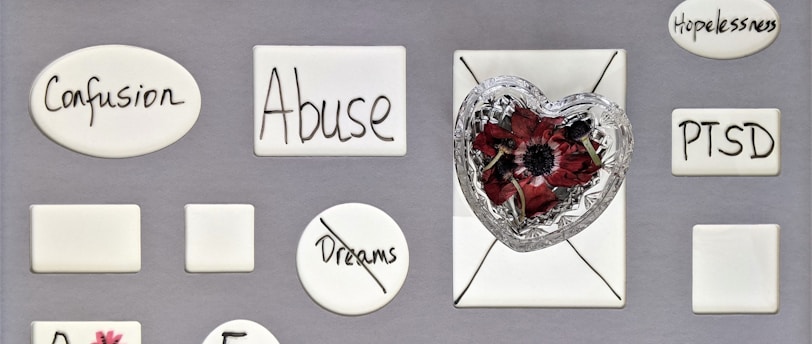

Trauma Doesn't Make Survivors Heartless. It Makes Them Cautious About Who They Trust.
Have you ever heard someone say, "They've gone cold since what happened to them"? Or, "They don't let anyone in anymore"?
When a survivor of abuse becomes guarded, slow to trust, or quick to pull back, others often read it as a hardened heart. Research suggests something very different. What looks like coldness is often caution, a mind and body trying to keep a person safe from being hurt again.
What the research says about trust after trauma
Trust really does change after interpersonal trauma. Researchers call trauma caused deliberately by other people "interpersonal trauma," and it is the kind most closely tied to lasting difficulty with trust. In a study published in Psychological Medicine, Bell and colleagues (2019) had 32 people with PTSD and 22 healthy controls play a multi-round "Trust Game" with both cooperative and unfair partners. Everyone, including people with PTSD, adjusted their trust based on how their partner behaved. But higher trauma scores were linked to lower trust toward cooperative partners, and the effect grew with the severity of the trauma.
That finding is worth sitting with. These survivors were not blindly distrusting or incapable of reading others. They were still responding to cues. The authors suggest the pattern may reflect negative beliefs about others that stick around after trauma. In other words, the caution is learned from real harm.
Betrayal from someone close leaves the deepest mark on trust. Betrayal trauma theory proposes that harm from people we depend on, such as a parent, partner, or caregiver, can disrupt how we judge who is safe. A University of Oregon study of 216 students (Gobin & Freyd, 2014) found that people with histories of high-betrayal trauma reported lower general and relational trust, which makes sense. Yet their actual behavior in the Trust Game was not significantly different from others. Their inner caution was real, but it did not make them unable to trust when trust was earned.
Mistrust can be a form of protection. In a qualitative study of ten survivors of human trafficking (Bashir, 2023, UCL, in collaboration with the Helen Bamber Foundation), every participant described mistrust of others. The researchers found it protected them from further harm, but it also deepened isolation and made it harder to connect. Importantly, the study also pointed to the chance of rebuilding trust through trauma-informed support.
That is the heart of it. Caution protects, and it also costs. Both are true.
But aren't survivors less empathetic?
This is where the "heartless" label breaks down most clearly. The research on empathy is not simple, so here is what it actually shows.
Greenberg and colleagues (2018, PLoS ONE) surveyed adults across two large samples and found that those who reported childhood trauma had, on average, higher empathy than those who did not, and that more severe trauma was linked to higher empathy. The authors suggest trauma may leave people more sensitive to suffering in others, though because the studies relied on self-report, they cannot say for certain what causes the link.
A 2023 study in Scientific Reports (Benz et al.) of 228 adults found that higher levels of childhood abuse and neglect were linked to more personal distress when seeing others suffer. Other facets of empathy, such as empathic concern and perspective taking, were not linked to early adversity. In plain terms, survivors were not feeling less. If anything, they felt others' pain intensely, sometimes to the point of being overwhelmed.
To be honest about the evidence, findings in this area are mixed. Some studies have reported reduced empathy in people with maltreatment histories, and a recent meta-analysis noted the results vary by type of maltreatment, dimension of empathy, and age. What the research does not support is the idea that trauma simply switches off a person's heart.
Why caution makes sense
Benz and colleagues describe how early adversity can leave the stress system chronically "on guard," making a person more sensitive to signs of threat. When your past has taught you that people who seemed safe were not, watching closely before you open up is not a flaw. It is a skill learned the hard way.
Why this matters
Calling survivors "cold," "closed off," or "heartless" does real damage:
It blames the person for a response that grew out of harm done to them.
It pressures them to trust before they feel safe, which can repeat the very dynamic that hurt them.
It ignores the care, sensitivity, and depth many survivors carry.
Bell and colleagues also note that reduced trust, left unaddressed, can make it harder for survivors to manage relationships and engage with support. That is a reason for compassion and patience, not judgment.
How to support someone who struggles to trust
Be consistent. Trust is rebuilt through small, repeated experiences of reliability.
Do not rush or demand openness. Let them set the pace.
Respect boundaries. Boundaries are not rejection.
Follow through on what you say. Every kept promise matters.
Encourage professional support. The research above points to trauma-informed care as a route to rebuilding trust.
The takeaway
A survivor who guards their heart has not lost it. They are protecting something that was hurt. With safety, patience, and the right support, trust can grow again, and it is theirs to give when they are ready.
If you are a survivor, you deserve support, and difficulty trusting is not a personal failing. A counselor or local domestic and sexual violence service can be a good place to start.
References
Bell, V., Robinson, B., Katona, C., Fett, A-K., & Shergill, S. (2019). When trust is lost: The impact of interpersonal trauma on social interactions. Psychological Medicine, 49(6). Link
Gobin, R. L., & Freyd, J. J. (2014). The impact of betrayal trauma on the tendency to trust. Psychological Trauma: Theory, Research, Practice, and Policy. Link
Bashir, Z. H. (2023). Towards an understanding of trust: The experiences of survivors of human trafficking (Doctoral thesis). University College London. Link | Summary: Helen Bamber Foundation
Greenberg, D. M., Baron-Cohen, S., Rosenberg, N., Fonagy, P., & Rentfrow, P. J. (2018). Elevated empathy in adults following childhood trauma. PLoS ONE, 13(10), e0203886. Link
Benz, A. B. E., et al. (2023). Increased empathic distress in adults is associated with higher levels of childhood maltreatment. Scientific Reports, 13, 4087. Link
This post is for general information and is not a substitute for professional advice.